
Diving Bali
Complete Diving Bali Information Guide
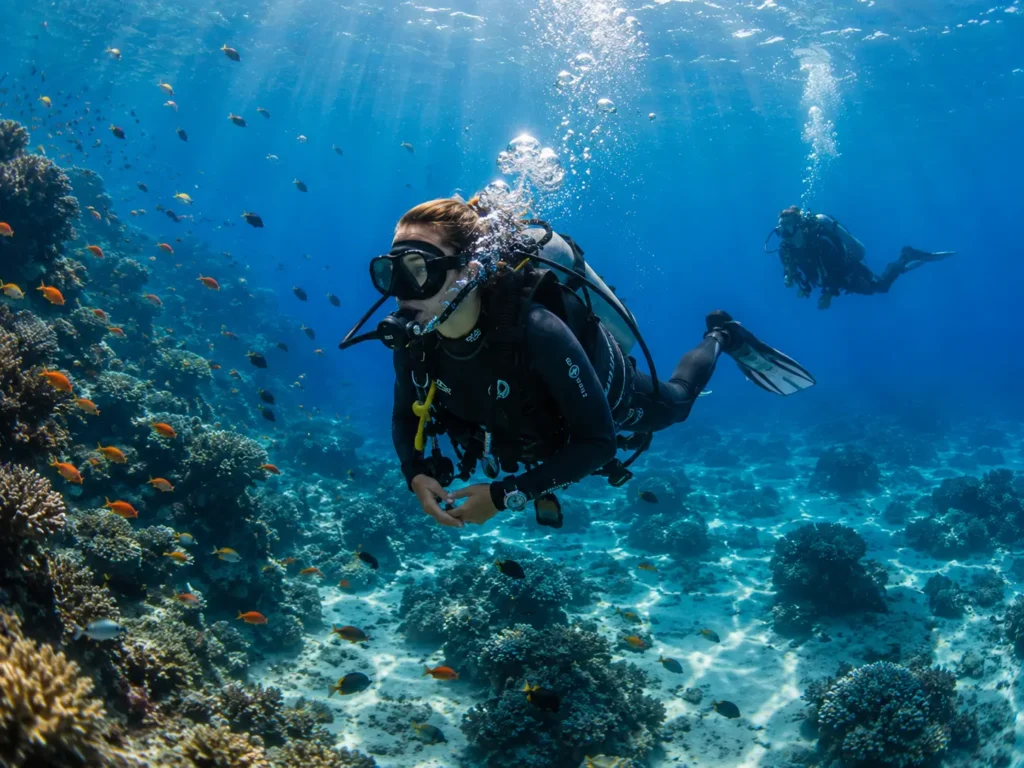
Bali offers everything from relaxed shore diving at Tulamben and Amed to reefs, wrecks, walls and faster drift dives around Nusa Penida.
DIVING BALI
Explore This Guide
Jump directly to the information you need.
Choosing the Right Dive Area in Bali
Beginners can try scuba diving under close instructor supervision without already holding a certification, while certified divers have a much wider choice of sites.
Choosing the right location matters more than simply choosing the cheapest dive: currents, travel time, certification level and marine-life priorities vary considerably around the island.
Diving Bali Quick Facts
| Practical detail | What to expect |
|---|---|
| Main dive regions | Tulamben, Amed, Padang Bai/Candidasa, Nusa Penida, Menjangan and Pemuteran |
| Best-known wreck | USAT Liberty at Tulamben |
| Manta diving | Nusa Penida, especially Manta Point; sightings and site access are never guaranteed |
| Mola season | Best-known period is roughly August–October around Nusa Penida, although nature is unpredictable |
| Beginner diving | Available through supervised introductory programmes; PADI Discover Scuba Diving starts from age 10 |
| Certification course | Entry-level Open Water training commonly takes about 3–5 days |
| Typical beginner price | About IDR 950,000 for a basic local introductory dive to around IDR 2.2–2.5 million for more complete programmes with transfers and inclusions |
| Certified dive day | Commonly around IDR 1.7–3.1 million before or including equipment depending on site and package |
| Open Water course | Published Bali prices vary widely, roughly IDR 4.8–8.5 million depending on agency, format and inclusions |
| Equipment | Usually included for introductory programmes; certified-diver packages may charge separately |
| Time needed | Half a day to a full day for recreational diving; longer when travelling from South Bali |
| Flying afterwards | Plan a minimum 12 hours after one no-decompression dive and 18 hours after multiple dives or multiple diving days |
Which Dive Area in Bali Is Right for You?
| If you want... | Start with... |
|---|---|
| Accessible beginner diving and the USAT Liberty wreck | Tulamben |
| A relaxed coastal base with shore and traditional-boat diving | Amed |
| A mix of beginner-friendly reefs and broader dive variety | Padang Bai |
| Mantas, drift diving and seasonal mola opportunities | Nusa Penida — when your experience and conditions are suitable |
| Wall diving and a quieter north-west Bali base | Menjangan / Pemuteran |
Is Diving in Bali Worth It?
Yes, particularly if you value variety: Bali combines accessible beginner sites, wreck diving, coral reefs, walls, macro life and more demanding current-driven dives within one destination.
It is particularly suitable when:
- You are a first-time diver: calm-water and shore-based introductory programmes are widely available.
- You are already certified: Bali offers much more than a single resort reef, including wreck, wall, drift and boat diving.
- Marine life matters: different areas offer mantas, seasonal mola, turtles, reef fish, macro subjects and varied coral habitats.
- You want several diving styles: a multi-day trip can combine east, north-west and offshore dive areas.
It may be better to skip diving when:
- You have very little time: transfers can turn two dives into a full-day commitment.
- You are uncomfortable underwater: snorkelling or Sea Walker may be a better first step.
- You have unresolved medical concerns: do not rely on a holiday activity to determine whether you are medically fit to dive.
- Your flight schedule is too close: adequate surface time after diving must be built into the trip.
Best Places to Dive in Bali
Tulamben is one of the easiest all-round choices, while Nusa Penida is stronger for experienced divers seeking mantas, drift diving and seasonal mola encounters.
| Area | Best for | Main consideration |
|---|---|---|
| Tulamben | USAT Liberty wreck, beginners, shore diving, macro life | Pebble shore entry and long road transfer from South Bali |
| Amed | Relaxed reef diving, shore and jukung boat dives, beginners | Sites vary considerably along the coast |
| Padang Bai | Reefs, macro life, beginners and certified divers | Conditions differ between protected and exposed sites |
| Nusa Penida | Manta rays, drift dives, coral reefs and seasonal mola | Currents and colder water can make some sites unsuitable for inexperienced divers |
| Menjangan | Wall diving, reefs and generally relaxed diving | Remote north-west location makes it less practical as a South Bali day trip |
| Candidasa / Tepekong | Experienced divers, walls, pelagic life and more demanding dives | Currents and conditions can be unpredictable |
EAST BALI DIVE AREA
Tulamben
Tulamben is the simplest recommendation for many first-time and newly certified divers. The famous USAT Liberty wreck is accessible from shore and the wider area also offers reef, wall and macro diving. The entry is over rounded volcanic stones rather than a sandy beach, so suitable footwear and assistance with equipment are useful.
EAST BALI DIVE AREA
Amed
Amed suits divers who prefer a slower coastal base with a mixture of shore and traditional-boat diving. Conditions and underwater scenery vary by individual site, so “Amed diving” should not be treated as one identical reef.
EAST BALI DIVE AREA
Padang Bai
Padang Bai offers one of Bali's broadest mixes of beginner-friendly and more advanced diving. Protected sites such as Blue Lagoon can be relatively calm, while offshore sites around the wider Candidasa area can involve much stronger currents.
OFFSHORE DIVE AREA
Nusa Penida
Nusa Penida is the standout choice when mantas, drift diving and the chance of seasonal mola are priorities. Manta Point is exposed and can only be used when conditions allow. Other Penida sites can have substantial or changing currents, so the dive centre should choose sites according to certification, recent experience and conditions on the day.
NORTH-WEST BALI DIVE AREA
Menjangan and Pemuteran
North-west Bali is worth considering when wall diving and a quieter diving base matter more than convenience from the south. Staying in Pemuteran is usually more practical than repeatedly travelling from Sanur, Kuta, Seminyak or Nusa Dua.
Planning Your Diving Experience in Bali
Plan around the dive area, certification requirement, number of dives, total travel time and post-dive schedule rather than choosing by headline price alone.
How Much Does Diving in Bali Cost?
A realistic Bali diving budget ranges from about IDR 950,000 for a simple local introductory dive to more than IDR 3 million for a premium or offshore certified-diver day.
Published prices vary because the same broad term can describe very different products.
| Experience | Realistic published range | What changes the price |
|---|---|---|
| Simple introductory dive | From about IDR 950,000 | Number of dives, instructor ratio and whether you stay near the site |
| More complete Discover Scuba programme | About IDR 2.2–2.5 million | Pool or confined-water session, equipment, transfers, meals and location |
| Certified east-Bali dive day | Often around IDR 1.7–2.5 million | Site, number of dives, transport and gear rental |
| Nusa Penida three-dive day | Around IDR 3.1 million at an established operator | Boat, site fees, Nitrox, equipment and transfer arrangements |
| Open Water certification | Roughly IDR 4.8–8.5 million | Training agency, eLearning, class size, equipment, transport and certification fees |
Do not compare prices until you know exactly what is included. For certified divers, equipment rental may be separate even when tanks, weights, guide, lunch and transport are included.
- Number of dives: one introductory dive is not comparable with a three-dive boat day.
- Equipment: confirm whether BCD, regulator, wetsuit, fins, mask and dive computer are included.
- Transport: South Bali pickup can materially change the total value.
- Training: an instructor-led beginner programme costs more than simply adding another tank for an experienced diver.
- Location: Nusa Penida boat diving normally costs more than straightforward shore diving.
Can Beginners Go Scuba Diving in Bali?
Yes. You do not need an existing diving certification to join a properly supervised introductory scuba programme.
PADI's Discover Scuba Diving programme, for example, is designed for first-time participants from age 10. It includes basic knowledge, safety instruction and closely supervised underwater experience but it is not the same as becoming a certified diver.
A beginner programme should explain:
- Breathing: how to breathe normally from the regulator and never hold your breath.
- Equalisation: how to manage changing pressure in your ears.
- Communication: essential underwater hand signals.
- Equipment: basic use of the regulator, mask, BCD and weights.
- Recovery skills: what to do if the regulator or mask is displaced.
- Supervision: where the instructor will be and how the group will remain together.
Tulamben, Amed and protected Padang Bai sites are common beginner choices. A first-time diver should not choose a site simply because manta rays or another large animal may occur there.
Should You Try Diving or Get Certified?
Choose an introductory dive if you only want to experience scuba once; choose Open Water certification when you expect to dive again.
| Option | Best for | Main limitation |
|---|---|---|
| Discover / introductory dive | Trying scuba without committing several days | Not a full diving certification |
| Open Water course | Visitors who want a recognised entry-level certification and intend to dive again | Requires theory, confined-water skills and multiple open-water dives over several days |
| Certified fun diving | Already certified divers | Operator may restrict sites according to certification, experience and conditions |
| Refresher / skills review | Certified divers who have not dived for a considerable period | Adds time before the main dives but can materially improve comfort and safety |
How Long Should You Allow for Diving in Bali?
Allow at least half a day for a simple local programme and a full day for most destination diving from South Bali.
- Local introductory dive: around half a day can be realistic when the dive centre and site are nearby.
- Tulamben from South Bali: normally a full day once the road transfer, preparation, dives and return journey are included.
- Nusa Penida: generally a substantial half or full day because boat travel, multiple dives and surface intervals must be included.
- Open Water certification: commonly around three to five days depending on the training format and how much theory is completed beforehand.
A package described as eight or ten hours does not mean that time is spent continuously underwater. Recreational dives are separated by surface intervals, equipment preparation, briefings and travel.
When Is the Best Time to Dive in Bali?
Bali can be dived throughout the year, but roughly May to November often provides the most consistently favourable overall conditions.
The best period depends on the location and your priority:
- General Bali diving: the drier months often provide good visibility and easier sea conditions.
- Mola around Nusa Penida: the best-known season is approximately August to October, when colder water increases the chance of encounters.
- Manta rays: they can be encountered around Nusa Penida throughout the year, but sightings are never guaranteed.
- Tulamben and Amed: diving continues year-round, although rain, swell and local conditions can affect visibility.
Wildlife should never be treated as an inclusion. A legitimate operator can take you to an appropriate site but cannot guarantee that a manta ray, mola, turtle or shark will appear.
What Should You Wear and Bring?
Wear swimwear and bring dry clothes; the operator normally supplies the specialist scuba equipment unless your booking says otherwise.
Useful items include:
- Swimwear: worn beneath the wetsuit or exposure protection.
- Dry clothes: useful after a long boat or road journey.
- Towel: confirm whether one is provided.
- Certification card: required for certified-diver trips; a digital card may be accepted depending on the operator.
- Dive log information: useful when the operator needs to assess recent experience.
- Sun protection: particularly important on Nusa Penida and other boat days.
- Personal equipment: bring your own mask, computer or other gear if you prefer using equipment you already know.
Leave unnecessary jewellery and valuables at the hotel. If you use prescription medication or need medical documentation, keep it accessible during check-in rather than packed elsewhere.
What Facilities Are Usually Available?
Established Bali dive centres normally provide equipment preparation and basic changing facilities, but standards vary considerably by location.
- Dive equipment: rental BCDs, regulators, wetsuits, masks, fins, tanks and weights are widely available.
- Changing facilities: toilets and showers are common at larger centres but may be basic at remote sites.
- Storage: ask whether valuables can be left securely while diving.
- Food and drinks: full-day packages commonly include lunch and drinking water, but this is operator-dependent.
- Transport: some South Bali operators include pickup while local dive centres may assume you are already staying near the site.
Do not judge the quality of a dive centre only by whether it has resort-style facilities. Equipment condition, dive planning, staff competence and emergency preparation matter more.
Should You Book Diving in Bali Ahead of Time?
Advance booking is sensible for courses, Nusa Penida trips, private instruction, groups and anyone who requires medical clearance or hotel transport.
- Courses: booking early gives you time to complete theory and resolve medical paperwork.
- Nusa Penida: boats, guides and suitable group spaces can fill during busy periods.
- Beginner dives: confirm instructor ratio and exactly how much training occurs before the open-water dive.
- Certified divers: provide your certification level and recent dive history before the operator assigns a site.
- Transfers: establish the pickup zone and whether transport is private or shared.
A walk-in dive can work well if you are already staying in Tulamben, Amed or another dive base and have a flexible schedule. It is less practical when you are travelling several hours specifically for one day of diving.
How Should You Plan Transport?
Choose the dive area before choosing the transport arrangement because Bali's principal dive sites are spread around the island.
- Tulamben and Amed: staying locally is best for repeated diving, early starts and night dives.
- Padang Bai: practical from Candidasa and parts of East Bali, and still feasible as a South Bali day trip.
- Nusa Penida: confirm where the dive boat departs rather than assuming you must independently take a public fast boat to Penida.
- Menjangan: consider staying in Pemuteran or north-west Bali because repeated transfers from the south are inefficient.
Hotel pickup can be valuable on full dive days because you will already be dealing with early starts, equipment and surface intervals. Confirm whether the quoted pickup is included, shared or private.
Safety & Suitability
Diving suitability depends on training, recent experience, medical screening, site conditions and the time available before flying.
Is Scuba Diving in Bali Safe?
Recreational scuba diving can be managed safely when the site matches the diver's training and current ability and the operator follows proper diving procedures.
Safety depends on more than whether a dive centre displays a recognised training-agency logo.
- Site selection: the operator should change the planned site when current, swell or visibility makes it unsuitable for the group.
- Guide ratio: beginner and inexperienced divers benefit from smaller groups and closer supervision.
- Equipment: BCDs, regulators, gauges and cylinders should be properly maintained and fitted.
- Briefing: entry, exit, depth, current, signals, lost-buddy procedure and emergency arrangements should be explained before the dive.
- Emergency preparation: ask what oxygen, first-aid and emergency procedures are available.
- Dive profile: follow depth, no-decompression and surface-interval limits appropriate to your training.
Nusa Penida, Candidasa and offshore sites can involve substantially stronger or less predictable currents than protected beginner locations. Do not exaggerate your certification level, number of logged dives or recent experience merely to reach a particular site.
What Medical Requirements Apply?
Expect to complete a diving medical questionnaire before training or an introductory scuba programme.
Medical screening is intended to identify conditions that may require assessment by a doctor before you enter the water. Answer it accurately rather than assuming that a condition is irrelevant because the planned dive appears easy.
You may need medical clearance depending on your answers, the training organisation, the operator and the programme. Pregnancy is incompatible with recreational scuba diving under standard diver-medical guidance.
Do not wait until the morning of a prepaid dive to discover that medical clearance is required. If you have a relevant condition or take medication that may affect diving, request the medical questionnaire in advance.
How Long Should You Wait Before Flying?
Do not schedule scuba diving immediately before a flight.
| Dive profile | Minimum pre-flight surface interval commonly recommended by DAN |
|---|---|
| One no-decompression dive | At least 12 hours |
| Multiple dives in one day | At least 18 hours |
| Multiple days of diving | At least 18 hours |
| Dives requiring decompression stops | Substantially longer than 18 hours |
These are minimum planning guidelines rather than a reason to compress a diving schedule. Leaving your final Bali diving day comfortably before departure is the simpler choice.
Is Diving in Bali Suitable for Children?
Some scuba programmes are suitable from age 10, but children's depth, supervision and certification restrictions are stricter than adult rules.
PADI Discover Scuba Diving and Junior Open Water training can start from age 10. Younger divers remain subject to additional depth and supervision restrictions even after certification.
- Age: confirm the exact minimum for the selected programme, not just the dive centre's general policy.
- Medical screening: children must meet the same principle of appropriate diving fitness.
- Comfort: the child should genuinely want to dive and be comfortable learning underwater skills.
- Equipment fit: BCD, mask, exposure protection and other equipment must fit properly.
- Site choice: a calm beginner location is more important than chasing a famous marine-life encounter.
A family should not assume that every certified adult and child can automatically join the same Nusa Penida or deeper dive itinerary.
How Do You Choose a Bali Dive Operator?
Choose a dive operator by site suitability, supervision and safety clarity rather than by the largest discount or the promise of a particular animal sighting.
- Training organisation: confirm which recognised certification or training system the centre works with.
- Exact product: ask whether the booking is an introductory programme, course or certified fun dive.
- Group size: ask how many divers will be assigned to each instructor or guide.
- Site decision: ask how certification, experience and current conditions affect where you will dive.
- Equipment: confirm what is included and how rental equipment is checked and fitted.
- Emergency arrangements: ask about oxygen, first aid and emergency procedures.
- Insurance: establish what activity or diving insurance is included and what your own travel insurance covers.
- Cancellation policy: confirm what happens when weather or sea conditions prevent the planned dive.
Be cautious when an operator guarantees manta rays, mola or another wild animal, or appears willing to take inexperienced divers to demanding sites without discussing their certification and recent diving history.
Frequently Asked Questions
Do You Need a Diving Licence in Bali?
You do not need an existing certification for a supervised introductory programme. You do need an appropriate recognised certification for normal certified-diver trips, and some advanced sites may require more experience than an entry-level card alone demonstrates.
Do You Need to Be a Strong Swimmer?
Introductory programmes focus on close supervision rather than independent diving, but participants should still be comfortable in water. Full Open Water certification includes swimming and floating requirements, so ask about them before enrolling if swimming ability is a concern.
Is the USAT Liberty Suitable for Beginners?
Tulamben's USAT Liberty is widely used for beginner and introductory programmes because it is reached from shore and offers suitable sections at recreational depths. Suitability still depends on the participant, conditions and the exact dive plan.
Are Manta Rays Guaranteed at Nusa Penida?
No. Manta Point is a recognised manta cleaning and feeding area, but mantas are wild animals. Weather, swell and other conditions can also make the site unsuitable on the day of your booking.
Is Nusa Penida Suitable for New Divers?
Some Penida sites can be used by less-experienced divers under suitable conditions, but other sites involve strong drift, changing currents or colder water. The operator should select the site according to the diver rather than treating all of Nusa Penida as beginner-friendly.
Can You Dive in Bali During the Rainy Season?
Yes. Bali is a year-round diving destination. Rain does not automatically stop diving, but local visibility, swell, runoff, wind and boat conditions can affect which sites are practical.
Related Experiences
These alternatives make sense when you want underwater access without committing to exactly the same type of scuba experience.
A better choice when seeing coral and marine life matters but breathing underwater, equalisation or scuba training does not appeal.
A simpler underwater activity for visitors who want to walk underwater with a supplied-air helmet rather than learn scuba skills.
A contrasting choice when speed and a short surface activity are more important than marine-life observation.
Final Advice
Choose Tulamben, Amed or an appropriate Padang Bai site when accessibility and beginner-friendly diving matter most; choose Nusa Penida when you are suitably experienced and mantas, drift diving or seasonal mola are the priority.
Before paying, confirm the exact dive site, number of dives, certification requirement, instructor or guide ratio, equipment, transport, final price and what happens if conditions require the planned site to change.
Explore the Best Bali 4 U Network
These connected guides and practical planning resources are useful next steps after deciding whether scuba diving suits your Bali plans.
Questions About This Guide?
Contact the editorial team if you have a question about this guide, have noticed information that should be corrected or updated, or would like to share reliable local knowledge, suggestions or feedback.